
From research to reform
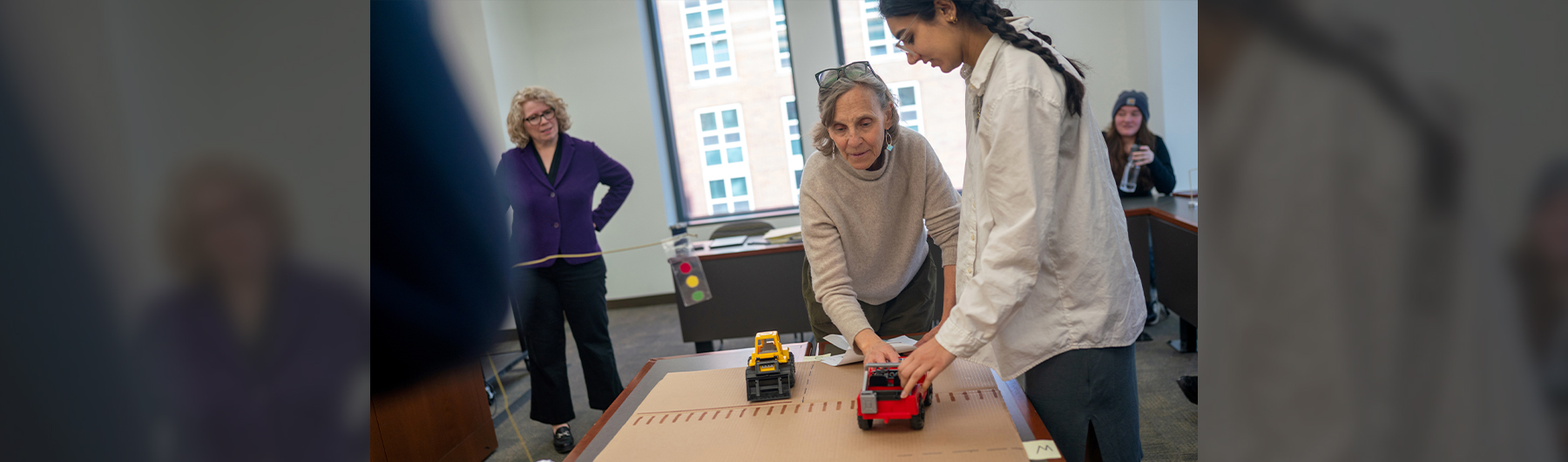
Legislation and Policy Clinic Director Anita Weinberg and student Isra Rahman work with a faculty-created model of a traffic intersection to simulate the complexities of legislative drafting.
From research to reform
Through the School of Law’s Legislation and Policy Clinic, students create and advance real-world change
Last year, Garrett Wolf (JD ’26) wrote a sentence that changed people’s lives. As a student in the School of Law’s Legislation and Policy Clinic, Wolf worked on a bill that requires the Department of Children and Family Services (DCFS) to create transition plans for the approximately 720 Illinois youth who annually age out of foster care. He collaborated with youth in foster care on a specific piece of the legislation: the minimum age at which the plans would be established.
"[The clinic is] one of many programs in the law school that makes us special.” Anita Weinberg
Would it be age 18, as stated in an early draft of the bill? Or could the clinic negotiate with stakeholders to reduce the age to 15? The latter option would provide youth in foster care additional time to access resources and support in key areas such as housing, financial literacy, education, and mental health.
“It might seem like a small detail, but their future was at stake,” Wolf says. “When the bill passed in 2025 with that stipulation, we were so happy and excited. Just being able to see that, wow, what I wrote became law—that was a crazy moment.”
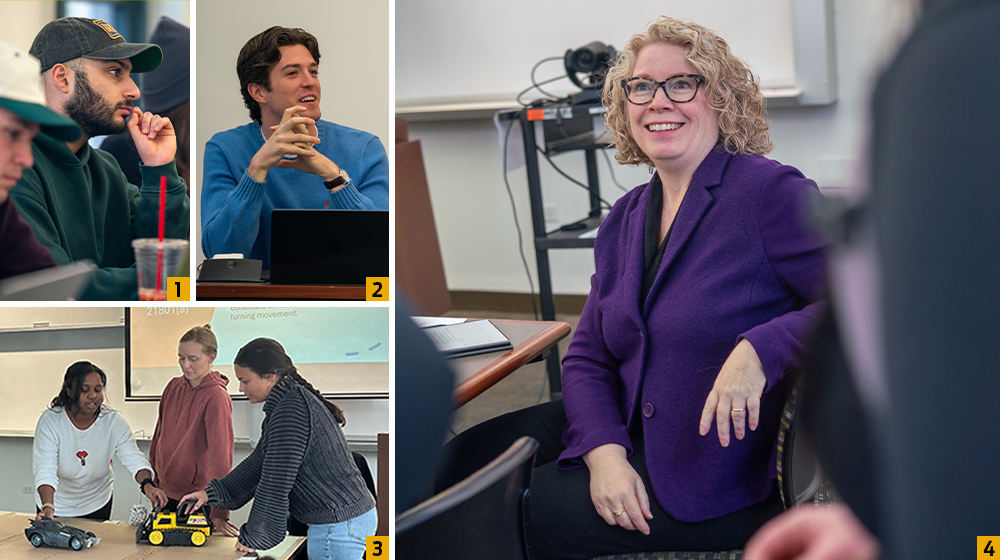
1. Through the Legislation and Policy Clinic, students study the legislative process and participate in policy and legislative development, analysis, advocacy, and implementation. 2. As a clinic student, Garrett Wolf worked on a bill supporting youth in foster care that became law in 2025. 3. Students collaborate during a clinic class. 4. Lisa Jacobs, associate director of the clinic.
Not every law student has the opportunity to see their words legally codified, but Wolf’s experience highlights how Loyola Law students and faculty are active participants in public policy and legislative development. This work, including research, analysis, advocacy, and implementation, often occurs under the auspices of the Legislation and Policy Clinic, which combines a weekly seminar course with a hands-on team project in which students are directly supervised by clinic faculty.
“Our role is education and advocacy,” says clinic director Anita Weinberg, who also serves as codirector of the Civitas ChildLaw Center and as the Curt and Linda Rodin Clinical Professor of Law and Social Justice. Weinberg launched the clinic in 2010, and nearly two decades later, this clinic remains uncommon among law schools, with the Center for the Study of Applied Legal Education reporting in 2022–2023 that only 16 percent of schools offered a clinic focused substantively on legislation and policy.
“It’s one of many programs in the law school that makes us special,” Weinberg says.
2010
When the Legislation and Policy Clinic was founded
16%
Law schools that offer a clinic focused on Legislation and Policy
SOURCE: CENTER FOR THE STUDY OF APPLIED LEGAL EDUCATION
A collective push for justice
Long before Jacqueline Ross (JD ’17) joined Loyola Law as a clinical faculty member and staff attorney for the Civitas ChildLaw Clinic, she was an incensed law student.
Ten years ago, as a student in the ChildLaw Clinic, Ross represented a young man with an emotional disability whose school could not meet his needs. While his mother sought alternative placement for her son at a therapeutic day school, his current school asserted he should stay home. However, the district started issuing truancy tickets—which were not being forwarded to the family’s new home in a timely manner. By the time Ross got involved, the family had racked up thousands of dollars in citations.
“It was so enraging that I wrote a paper on the use of ticketing for school-based offenses,” Ross says. Clinical Professor of Law Miranda Johnson, director of the Education Law and Policy Institute, heard about the paper and brought the topic to Weinberg.
The clinic agreed to tackle school ticketing—in which police and/or school resource officers issue citations for vaping, fighting, littering, and other infractions on school grounds, sending youth not to juvenile court but to a municipal administrative hearing without appropriate legal protections—but it was a protracted process.
Meanwhile, in 2022, UC Berkeley School of Law asked the clinic to collaborate on a national initiative to abolish fees and fines in the juvenile justice system.
“Again, it was this idea of using financial tools to punish youth in harmful and inappropriate ways,” says Lisa Jacobs, associate director of the clinic. “Whether it’s a fee, a fine, or a ticket, it doesn’t address the underlying needs of young people.”
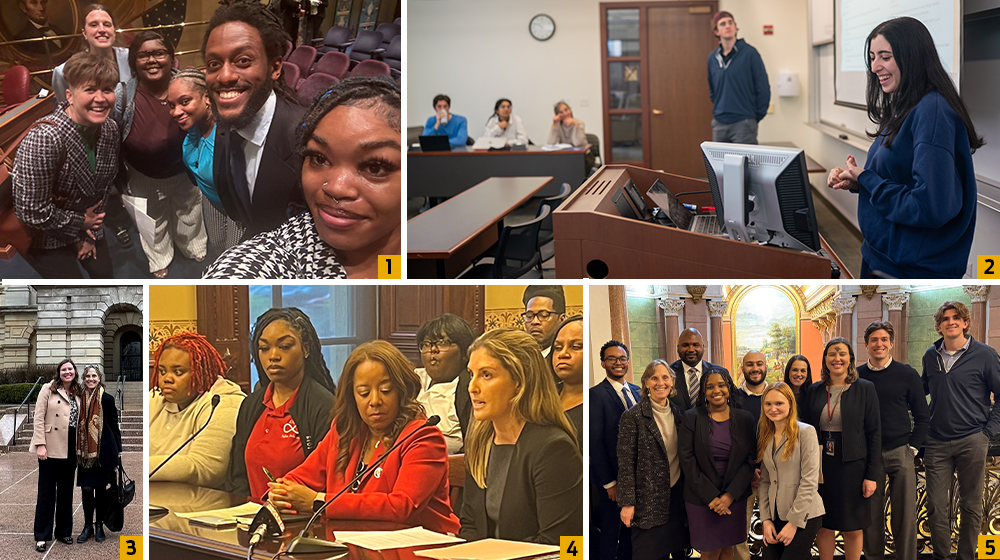
1. Illinois State Senator Mike Simmons (center) served as senate sponsor of the hair care bill. 2. Student Leanna Nasrallah presents during a clinic class. 3. Montana Birringer (left) with Anita Weinberg at the Illinois Capitol in Springfield. “It was very cool to see something I worked on in clinic go through the process and become law,” Birringer says. 4. As a clinic student, Jeni Siegel (JD ’24) (right) testifies before the House Adoption and Child Welfare Committee about the hair care bill, with chief sponsor Illinois State Representative Kimberly Du Buclet (center) and representatives from the Statewide Youth Advisory Board. 5. Clinic Director Anita Weinberg (front left) with clinic students and alumni: Tyler Creed, Illinois State Senator Elgie R. Sims Jr. (JD ‘07), Marcelle Dupuy, Hooman Hojabri (JD ’26), Tess Pickering, Kelsey Wilson (MEd ’21, JD ’21), Montana Birringer (MPP ’23, JD ’23), Garrett Wolf (JD ’26), and Chris Gasche.
Montana Birringer (MPP ’23, JD ’23) appreciated the massive group effort required to get the fees and fines bill across the finish line; SB 1463 passed in 2023. As part of the Debt-Free Justice coalition, the clinic played a key “boots on the ground” role, Birringer says. In addition to writing fact sheets and developing a website, Birringer spent hours holed up in a conference room, redlining the Juvenile Court Act and drafting legislation.
During a second stint in the clinic, Birringer focused on the school ticketing bill, conducting a state-by-state analysis to better understand the options for Illinois. The issue gained momentum in 2022 after an investigative report from ProPublica revealed egregious aspects of the practice—including the fact that Black students were ticketed at disproportionate rates.
“In addition to the financial burden on families, some of whom were going into debt because of these school tickets, there also was no due process in place,” Weinberg says. “The families had to go to municipal court, where there’s no real appeal process or way to expunge records.”
Clinic student Joe Larimer (JD ’24) testified on behalf of the bill during a committee session in 2023. He describes the experience as eye-opening even though the bill was not successful at that time. “I learned a lot as a law student, citizen, voter, and former educator,” he says. “The legislation process can be frustrating. Sometimes you work hard and put in a lot of energy just to run up against a wall. I like to keep in mind that the only way to knock down that wall is to keep running at it.”
Often, a proposed bill will span several consecutive clinic courses, even years, with different students facilitating various aspects of the project. That’s what happened with the school ticketing bill (SB 1519), which was finally signed into law in August 2025. “The clinic exposes students to the idea that progress is slow, but it’s worthwhile,” Ross says.
Birringer, who is associate legal counsel to the Illinois Senate Democratic Caucus, was thrilled to see the bill succeed. “I didn’t staff the bill while it was here, but I kept an eye on it,” she says. “It was very cool to see something I worked on in clinic go through the process and become law.”
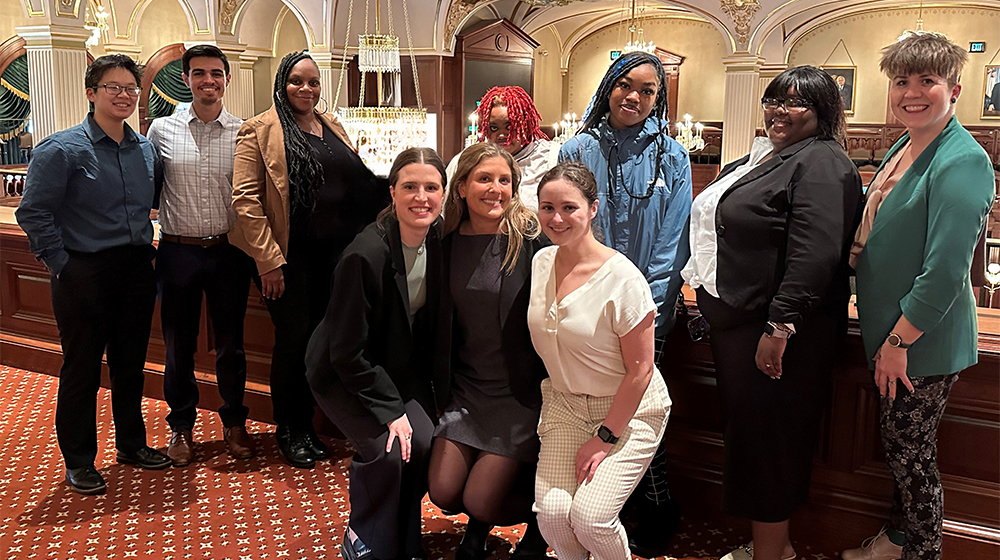
Legislation and Policy Clinic students, members of the Statewide Youth Advisory Board, and representatives from Be Strong Families collaborate on behalf of kids and families throughout Illinois.
How lived experience led to legislation
For many years, the clinic has collaborated with the DCFS Statewide Youth Advisory Board, a group of current and former youth in foster care, who use their platform to educate, advocate, and empower youth in the foster system. Law students meet with the board to provide the legal and policy expertise that helps youth priorities become law and practice.
“We don’t come in telling them what their agenda should be,” Weinberg says. “But we help them think through priorities and whether a legal solution is the best option or not.”
In 2023, the clinic agreed to support the board in efforts to pass legislation concerning hair care—a deceptively complicated topic because of the ways in which hair care encompasses race, ethnicity, culture, religion, gender, health, self-expression, identity, and more.
“We wanted to provide resources and tools to help families who have cross-cultural placements and maybe don’t understand a child’s hair hygiene or needs,” says former board member Jocelyn Fetting. “But it also goes beyond that. No one ever took my brother to get a haircut. And when you’re in a system that takes so much away, it’s important for youth to know they’re entitled to resources that can help them feel confident.”
"When the bill passed in 2025…we were so happy and excited. ...What I wrote became law—that was a crazy moment.” Garrett Wolf
After meeting with the board to understand their concerns, Loyola students began drafting legislation. The bill required buy-in from a variety of stakeholders, including DCFS, foster parents, biological parents, and youth in foster care.
“It was definitely a challenge to come up with a plan that everyone would be happy with,” says Olivia McGrath (JD ’25). “We had to consider things like, How will it be implemented? Where will it fit into existing child welfare bills?”
In addition to the big picture, McGrath needed to drill down to the details. Weinberg urged her to analyze each word in the draft, reviewing its connotation and meaning, to ensure the bill stated precisely what they wanted it to say.
Advocacy that endures
Through the Legislation and Policy Clinic, students become active participants in public policy and legislative development, and their impact endures long after graduation.
Board member Ni’Yuana Baker also thought carefully about word choice as she prepared to testify on the bill. “The Loyola students helped me build my testimony,” she says. “The biggest thing that stuck with me was the power of storytelling.”
Nervous but confident, Baker stood up in front of a House committee, and subsequently a Senate committee, to share the experiences of her younger sister. “She had eczema on her scalp and was neglected to the point that she had scabs and was balding,” Baker says. “Kids bullied her about it.”
When the bill passed in 2024, Baker nearly cried with relief. HB 5097 requires DCFS to ensure youth in foster care receive “culturally competent” hair care and mandates a customized hair care plan for each individual.
“The bill is personal for us, but it felt like it was personal for the Loyola students, too,” says Fetting. “They listened to and validated our experiences, helped us stay organized, wrote legislation, and advised on our testimonies. They had our back the whole way through.” –Kelsey Schagemann (July 2026)
Loyola Law Magazine 2026
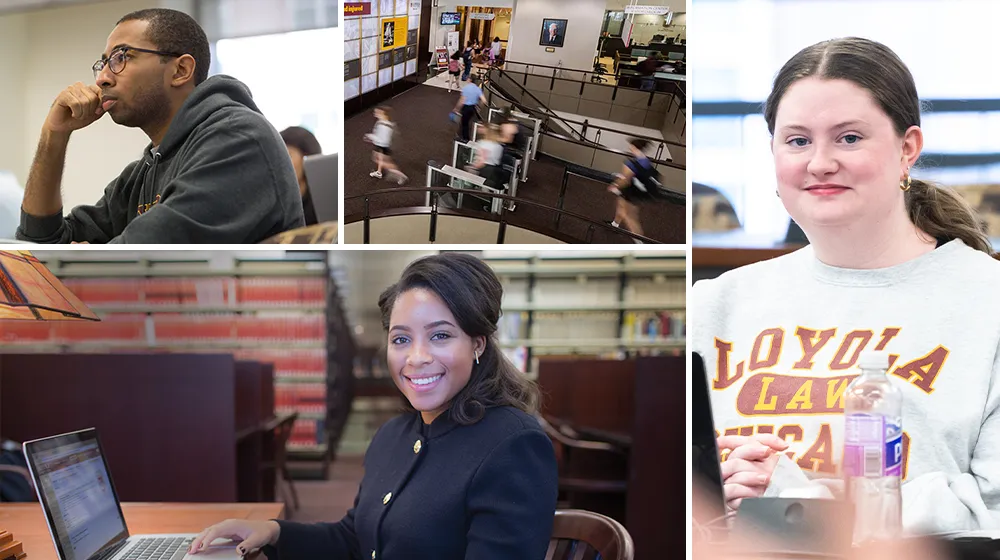
Weekend wonder
Celebrating 10 years, Loyola’s innovative part-time JD program, Weekend JD, institutes a format refresh that will make a law education even more accessible
Read the story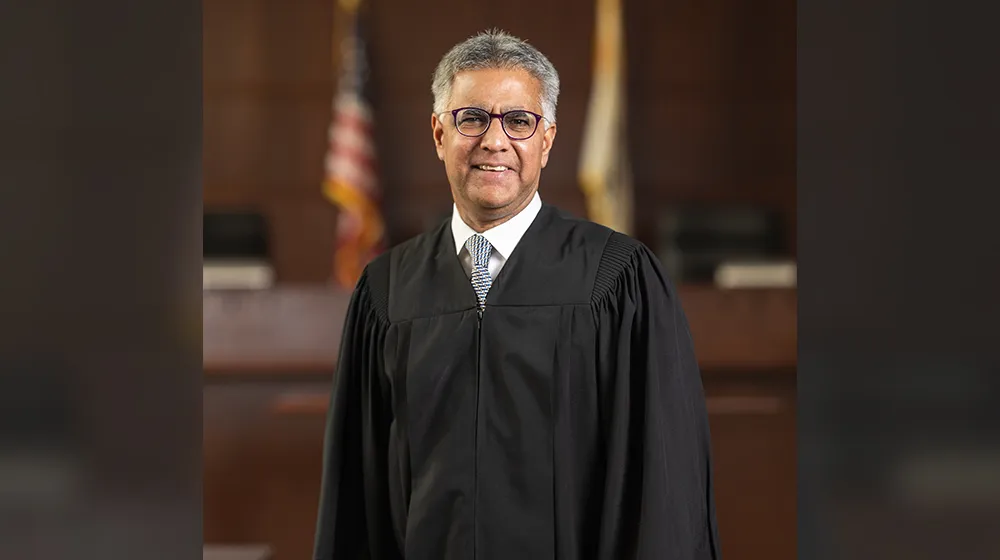

Honoring leadership and service
School of Law awards celebrate Kathryn L. Conway, Sara Ellis, James J. Faught, Jean Gaspardo, Thomas V. Lyons II, and Jeanne M. Reynolds
Read the story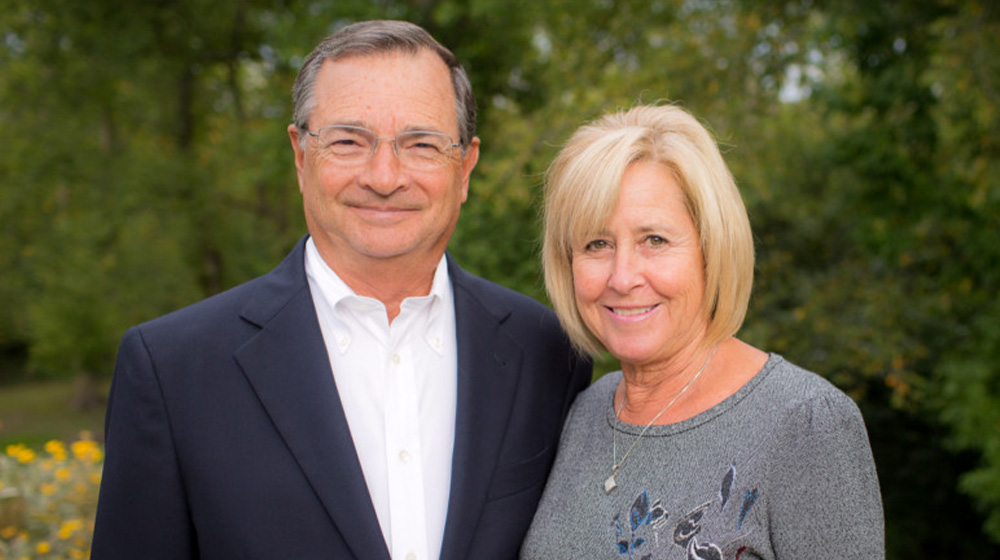
Expanding experiential learning
Gift from longtime supporters Curt (JD ’75) and Linda Rodin to boost clinical legal education
Read the story